
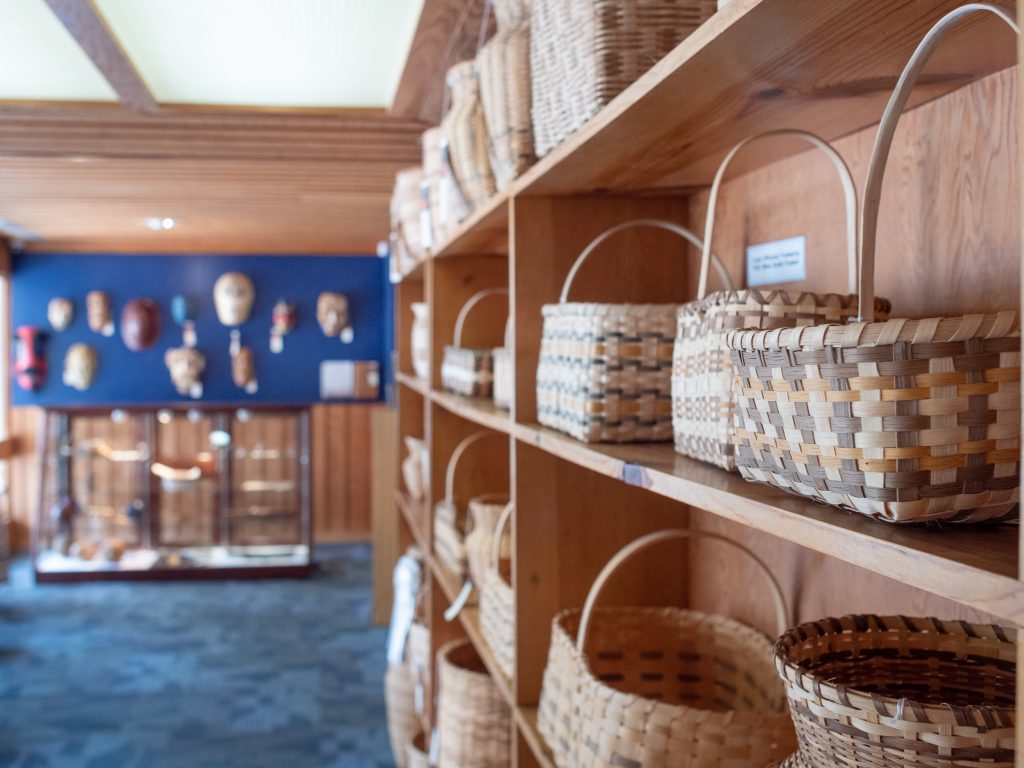
The Qualla Arts and Crafts Mutual in Cherokee — the oldest Native American craft cooperative in the nation — showcases the work of hundreds of artisans from the Eastern Band of Cherokee Indians.
“The continuing of our history as a tribe, and also through the arts and crafts, it is a way for artists to express themselves,” said QACM manager Amanda McCoy. “No matter what they do, our artists put their heart and soul into every piece they make, and it really does show in the craftsmanship.”
With the tribe located on the Qualla Boundary, the longtime organization offers craftspeople a chance to display and sell their wares, learn from one another, and ultimately pass on their traditional ways.
“A lot of these artists are masters of their craft,” McCoy said. “And for good reason, they’re very particular in their styles — it’s an honor to be invited in amongst the ranks [of talented members].”
Establishing the Co-Op
In 1946, roughly 60 Cherokee craftspeople met to establish the Cherokee Indian Craft Co-op. Around the same time, the Great Smoky National Park, located adjacent to the Qualla Boundary, began to attract tourists to the area, presenting an opportunity for Cherokee artists to display and sell their artwork while also keeping Cherokee traditions alive for future generations within their community. By 1949, the cooperative was juried into the Southern Highland Craft Guild. It was officially renamed Qualla Arts and Crafts Mutual in the 1950s.
“One of our charter members said in 1946, ‘It’s the best thing that our tribe ever chose to do,’” McCoy noted. “Because we feel that this place is just as important as anything historical because it’s becoming a part of history.”
Ensuring Traditions Endure
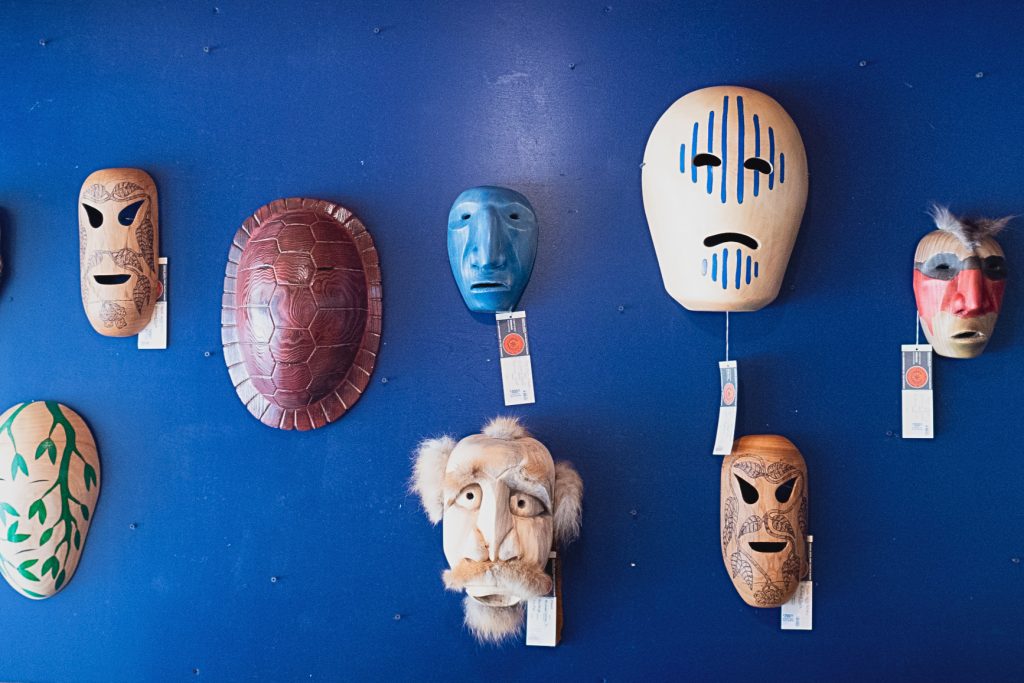
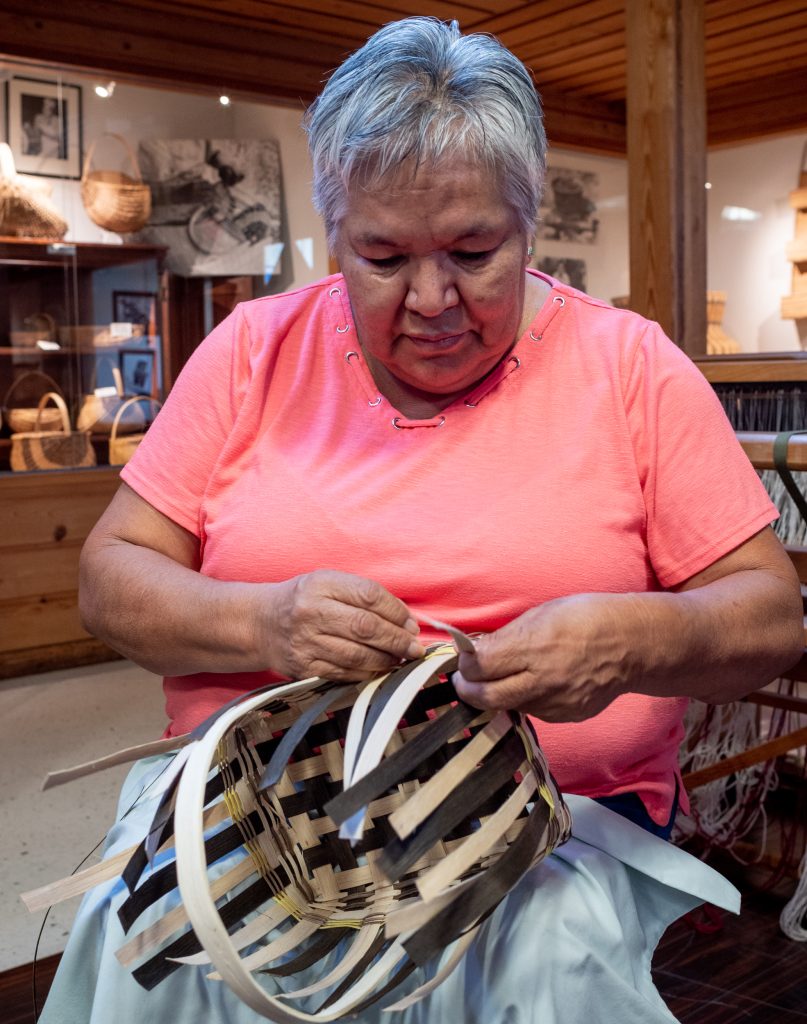 To join the cooperative, craftspeople and artists must undergo a juried process, in which a board of QACM craftspeople evaluates and determines the artist’s skills and artwork. That intricate skillset — whether it be baskets, jewelry, pottery, beadwork, textiles, carvings, paintings, or weaponry — is something that’s taken very seriously by the cooperative, especially in terms of how materials are gathered and what the exact creative process entails.
McCoy also noted how a big part of the ethos of the QACM artists is to actively be aware of the sustainable harvesting of materials used in the creation of their products. QACM collaborates with local conservation groups, including Mainspring Conservation and Conserving Carolina, to study the land, educate artists, and mindfully gather materials.
In conversation, McCoy gives the example of the distinction between a basket weaver and a basket maker. “Anybody can go and pick up a splint kit from an arts and crafts supply store and weave a basket,” McCoy said. “But, to be a basket maker, they have the knowledge — to pass on to future generations — of how to go out into the woods and find the proper tree they need or the proper-sized river cane they need.”
Additionally, QACM participates in the Revitalization of Traditional Cherokee Artisan Resources program, a grant-funded initiative under the Cherokee Preservation Foundation, working in collaboration with the NC Cooperative Extension program. From children to adults, programs through RTCAR encourage artists to learn about Cherokee cultural traditions and artwork, from land to hand, and how to protect and care for the land across generations.
Now, with the 80th anniversary of the Qualla Arts and Crafts Mutual quickly approaching, those storied artisans who are part of the cooperative continue to look towards the future with hope and pride.
“[The cooperative] shows and reflects our mission of keeping the arts and crafts alive,” McCoy said. “We would love to see this place continue on after we’ve passed away. We may not be here, but it will go on.”
Learn more about Qualla Arts & Crafts.
Images Courtesy of Qualla Arts & Crafts Mutual and Blue Ridge National Heritage Area
This article is featured in the 2025-2026 issue of Blue Ridge Craft Trails Magazine, published by Smoky Mountain News. Read more articles here.
